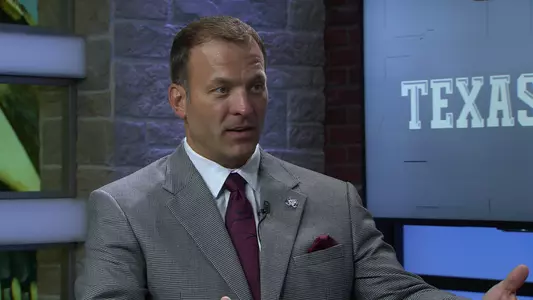
Ross Bjork Teleconference: March 31
Mar 31, 2020 | General
Quotes from Ross Bjork's March 31, 2020 teleconference are below.
Q: You've obviously had conversations, I'm guessing, with your head coaches about this. My first question is kind of what was their reaction initially [to the NCAA's eligibility decision], and how do you work through this? Because obviously, this is certainly uncharted waters.
Ross Bjork: We scheduled a head coaches conference call for this morning with all of our head coaches, not just the spring sports. We wanted to have an update to all of our head coaches across the department about what was happening in our community, around college athletics. Obviously, they're staying in touch with a lot of people, but that way we could all congregate. Then, we had the spring sports stay over on the meeting and we discussed specifically this decision. You guys heard me on that Friday that we all got together after the SEC Men's Basketball Tournament was canceled. I said I want to be as liberal is possible. I want flexibility for our student-athletes. That was my position back then, and it really didn't change throughout. I'm really pleased that this decision was made in the manner that it was. It was handed down and now we have to work with our coaches, we work with our student-athletes on a case-by-case basis, to figure out what the future holds for the senior class on what they decide to do. There are all kinds of examples. There are some examples where somebody already has graduate school set up, they've already got a graduate assistant position set up, but they could come back their senior year. Well, they're going to take that graduate assistantship and move on with their athletic coaching career. I wanted the ultimate flexibility. Now it's up to our coaches and our administration. We will all sit down, we'll figure out where do they want to go with this? They have conversations. They always have exit meetings with student-athletes, so they can have those conversations with our student-athletes. In due course, we are only on March 31st. The semester doesn't end until the middle of May. We have a little bit of time to work on this. That's what will happen in the next couple weeks. We'll have a plan, we will work on it. The coaches will formulate what they think is best for their programs. We will look at the financial impact. We'll look at the student-athlete impact, and then you make the right decisions. Then there will be some athletes that may be offered to come back that decide not to because of their situation. It's going be case-by-case and everything will unfold over the next several weeks.
Q: How long it would take to get a budget ready for something like that?
RB: What we talked about with our spring sport coaches, it was to give us their thoughts, their plan on what they would like to do. That way we can review all that work in concert with them. If every student-athlete who had an extra year of eligibility in the senior class were to return next year, that number is around $565,000. If everybody returned as is, knowing that that is not going to happen, we think that number will be less. But we won't have specifics until, really, all these conversations take place. The coaches will map out what their plans might be and they will sit down with the student-athletes. It will be several weeks before the dust kind of settles on everything.
Q: If I could follow up just real quickly, how much would not having a football season, or a partial football season, effect all of this?
RB: We haven't modeled that out yet. Our budget has been in the public records, so people can look at how much we bring in with ticket sales for football and donations. Football is the majority of our athletics budgets. So if our operating budget is in the 155 to 160 million range, it is the majority of that budget. Everything rises and falls on football. It's monumental, but we really haven't mapped that out. We were being optimistic with everything. We think the next 30 days for this whole thing is very critical, based on the medical experts that we're listening to. We all need to practice our distancing, like we're doing here today, and continue this. Then we want a plan for the fall and kicking off the season. You all can do the math; the numbers are substantial. But we're focused on getting this behind us and moving forward as a society together.
Q: I know the NCAA guidelines laid out that you can use the Student-Athlete Assistance Fund to help with some of those scholarships. What does that fund look like for A&M? And how much do you foresee having to dip into that to maybe help out with some scholarships?
RB: The way that works, a lot of that is tied into the NCAA men's basketball tournament revenue distribution. We are still filtering through that information to see exactly what that number is going to be. It will be depending on the budget, depending on how much is available in that student-athlete opportunity fund, it is still to be determined. The good thing is, there is flexibility, because normally that fund is restricted for other things, you cannot use it for scholarships. The good thing is, the NCAA did provide flexibility. But we also know for the next fiscal year, that number is going to go down based on this men's basketball distribution. And I just don't have those numbers with me right now. But it will be a smaller number.
Q: I'm hoping I'm not misreading what the NCAA said, but that they were offering that whatever the student-athlete had in the way of scholarship, you all could offer at least that, but all the way down to zero? Is that correct? Do you plan to offer the same amount that you would have had to offer to the spring athletes, or do you see the seniors maybe being minimized out?
RB: The way they laid it out is you could offer the same aid or less, and that would not count for the senior class. That would not count against your scholarship limitations in terms of your number of scholarships available. If you offered above, you increased someone's scholarship when they were a senior, that would count against your total. And so again, back to what we were talking about earlier about being flexible, that's where we want to really map out a sound plan. Work with each athlete individually. The thing that people aren't really talking about is for the equivalency sports. Let's just say that a senior was on a 25-percent scholarship and they were graduating in May. They are graduating in May and we say, "We want you to come back. Here's your 25-percent scholarship." They have to come up with the other 75-percent, and are they able to do that? Do they want to do that? Those are all the things that we have to map out in terms of what does the athlete want to do? What's their financial situation? All of these spring sports are all what we call the equivalency sports, with the exception of women's tennis where everyone's on a full ride scholarship. If we're offering somebody money to come back as a senior, that means that is coming out of their pocket, they are taking out a loan or something in order for them to pay for their extra year. It's a give-and-take on both sides. That's why we want to really map out an individual plan for each student-athlete and give that flexibility to our coaches and to our student-athletes and the SEC.
Q: I know that the Big 12, Bob Bowlsby, said last week that he feels that the Big 12 can make up the shortfall for what the NCAA was going to give to each of its member schools. Have you received that assurance from the SEC, as well? That your conference allotment is going to be about the same?
RB: We have not. Those numbers are still being worked on as we speak. Obviously, we're going through a new television negotiation with the SEC and TV partners, so that's ongoing. There's a lot of fluid activity around the budget. We do know that our number, what we got last year will probably be a little bit less for fiscal year 2020. But we just don't have all the final data yet as the SEC sorts things out.
Q: Ross, Jimbo [Fisher] has a reputation as being a tireless recruiter. Is that nice? Is it comforting to know you've got him working the phones through all this time, as well? And how can that impact recruiting, as well?
RB: Yeah, I spoke to Jimbo yesterday, separately, and he said recruiting is going very well. He said one of the things that's happening is a lot of the in-state kids who may have wanted to look elsewhere, this has caused them to say, "Hey, I want to stay closer to home because of all of this." And so having him and their relationship building, he and our staff are so good at that. I think this is the best staff that he's had. The energy level that the new guys have brought, mixed with the guys who were returning on the staff, I think is a great combination. He feels like recruiting, even though we're in a dead period, is going extremely well. Being creative like we did last week, I think helps those kinds of things. And then we had momentum. We had momentum in the program and so to continue that has definitely has helped a lot with Jimbo's mentality.
Q: Going off of that, have you received any feedback on the Madden tournament, and do you see somebody on other recruiting staffs create other recruiting opportunities like what the football staff did?
RB: You know, I haven't heard what the bracket looks like, so we need to get that updated somewhere, but Jimbo did say that that he's not playing. He's not playing the Madden game, so we'll keep him as the CEO in all of this.
Q: A lot of people have weighed in about where we stand in terms of the football season and obviously Kirk Herbstreit got a lot of attention for a little bit of doom and gloom there, I guess. Two part question: Do you have a sense, just personally, do you think we see a full football season? And second of all, obviously, for any practice down the road, when do we have to be back on the field to actually have a chance to start in the first or second week of September?
RB: I'll take the second part first. One of things we're focused on is Labor Day Weekend being our kickoff, so working your way back in terms of the allowable number of days of practice during training camp. You back that up, then you look at what happens in July and June. That's what we're mapping out right now. What would a return to activity look like, assuming that we can all get together at some point this summer? We are mapping out those scenarios right there. The doom and gloom part here's the way I look at it, I just think about how fast this has gone. It's March 31st. Essentially all of this came together March 10, 11, 12 and 13, right? So to be talking about something that is still five months away, to me, is way too premature. We do not have enough data. We don't know what the peak of all of this is. To be talking about what happens on Labor Day Weekend at this point in time, I believe, is way too premature. What everyone is telling us, the president put out April 30, we need to continue to practice social distancing. What does the next 30 days hold? What does the next 45 days hold? Where are we as a country? Where are we state-by-state? To me, that's what we have to focus on, is we have to really focus on the containment, supporting our medical professionals. We will map these plans out. We'll have contingencies and things like that. But if you think about how fast we have gotten to this point, and we still have five months to figure a lot of this stuff out. That's what I want to focus on and that's where the conversations have been held at the SEC level. I've talked to other athletics directors around the country and I don't think Kurt really meant the doom and gloom piece. I think he was just talking from his perspective, without having a lot of the data saying, "Look, we still have five months. Let's get through these next 30, 45, 60 days. Let's see where we are, then get into the summer and let's all get back together based on what health experts advise us to do."
Q: Going back to the athlete's eligibility for next year. I know everything is case-by-case, but let's talk about a track athlete who essentially has two seasons. For someone electing to come back, have you thought, would they just kind of sit out the winter season and then get to participate in outdoor? Or how does that work?
RB: Basically, the way track works is it is basically three separate sports. You have cross country, you have indoor track and you have outdoor track. You could have an athlete who redshirts the indoor season, but then competes in the same academic year in the outdoor season. The way we've looked at our underclassmen in all of our spring sports, the freshmen, the sophomores and the juniors in these spring sports essentially, it's a redshirt year if the coach and the athlete choose to take that. So that's how it would apply. Anybody who competed in the indoor season of track & field that year is going to count towards that eligibility. Obviously, they didn't compete in the outdoor season, and they could save this year as a redshirt year. So hopefully that explains it. But it's basically two separate sports between indoor and outdoor track.
Q: We're getting out into the weeds on that subject, but if you have a track athlete who competed indoor that was trying to do outdoor when the season got suspended, do you only pay for half the semester in academic aid?
RB: No. You pay for the full, whatever their scholarship value is. It just applies to the whole year, if you will.
Q: Just for clarification, for junior college transfers coming in. Let's say, for instance, if you're a college transfer. As a sophomore, eligibility wise, does he [or she] come in as a junior? Or does he [or she] get a year?
RB: Well, I haven't received clarity on that, to be honest. We talked about that on our SEC athletics director call today. That was a follow up question that the conference office is going to get to. I've seen some traffic on social media, but I'm not sure I've seen it confirmed one way or another. So I don't have clarity on that quite yet.
Q: I've got a question on baseball. Let's say Rob [Childress] used two scholarships on seniors. They all want to come back. You bring him back. Do you guys get 13.7 scholarships next year? [RB: Yes, that's correct.] So you could have people where scholarships at some university playing against you just use 11.7? [RB: That's correct.]
RB: Also, baseball is the only spring sport that has a roster limitation. We have a 35-man roster in baseball, so those seniors would not count against the roster limitation either. If you brought back those two seniors, you could have 37 on the roster. I think the other thing this did from a baseball standpoint, is your juniors who are maybe on that verge of seeing what their draft probability look like, I think this gave them some leverage in the Major League Baseball Draft, as well and gave them probably their future. I think your junior class in baseball was benefited by this decision, as well.
Q: Over the weekend, Bob Bowlsby had talked about relaxing some things in terms of allowing the coaches two hours a week. I believe it was that up to the each conference to do that? Do you expect the SEC will be doing that? Do you expect him to follow suit?
RB: We, as in the SEC, instituted on Friday that starting yesterday, Monday, that all of our coaches and all of our sports could have two hours of the sort of virtual playbook, film review. We couldn't watch our quarterbacks throw to a group of wide receivers on video; we can't do that. It's all about film review, play book review and scouting reports if you want to do that. But, two hours for athletes per week is now allowable. That goes until April 15th and they will decide what happens after April 15th. But we did, as a conference, put that in. So right now, I think that's causing some angst in the coaching world a little bit, that each conference is somewhat doing their own thing with regard to this. And we just tried to ease into it. We just started online classes last week. We wanted to see how that went for our student-athletes. Let's ease into this two hours. Some programs will do it, others won't. I see this maybe being more of a fall sport preparation mechanism. I see them taking advantage of it. But if you're a golfer or tennis player, you don't really have a playbook, right? But I'm glad to be allowed the flexibility.
Q: I know this is an unprecedented situation, but have there been any thoughts, in your mind or do you get a sense nationally, if directors, presidents, schools will adjust how they budget based on the nature of the fallout of this thing from a budgetary standpoint with the impact that it's going to have financially on programs?
RB: I don't think there is any doubt that there will be budget operational adjustments. I think when I was on the call with our coaches we walked through just some of the language that they are probably going to hear as we go forward, in terms of budgeting back to the basics. We will have to recalibrate some things. There is no one that is immune to this. From a financial perspective, no athletics department will be immune to this. I think we all have to be creative. We have to be smart. We have to be efficient. We're having a conversation, really, about doom and gloom. I know I have to be a realist, and I have to plan, while also being an optimist. Everybody is going to go through this. Everybody is going to go through a sort of belt tightening, if you will. That conversation we've started. We haven't read all the models yet, because some of the numbers are fluid, but you're going to see this across the country where everyone is impacted financially. And then every citizen, right? Every business is going to have some impact financially. So we're all going to face it in some degree or another.
Q: What can you guys do, if anything, for your student-athletes who would have been on campus, who aren't on campus from a nutrition standpoint? Because obviously you guys will do a lot from the nutrition standpoint when they're with you. But when they're at home, what can you do, if anything?
RB: That's a great question. We would be allowed to send them snacks, if you will. That would be permissible. Now that we're kind of into this second, third week, we're assessing that. We're getting some intel on snack packs and snack boxes that are easily to mail to student-athletes. We're looking at some of that. So far, we've gotten good intel that our athletes are staying nourished accordingly, so that's good. We are able to give them plans, and our dieticians and nutritionists have had dialogue. But that's something, as we get longer into this, that we're definitely going to look into.
Q: We're going back to the Student-Athlete Assistance Fund that's out there. If a student-athlete is staying in town at an off-campus apartment, is there any way that the university can help them if they're in some kind of trouble, using that fund? What does that kind of process look like for you?
RB: One of the things the NCAA did on that Friday the 13th was free up that assistance fund money to be more flexible. Basically, the student-athlete would give us their circumstances, there is some paperwork that we submit and we make the funds available. We haven't had to engage in that. We did actually start a process with some of our international student-athletes to maybe get them home. But obviously, when everything got contained even more we stopped all that, so that money is flexible. We haven't had to use it yet, but if something comes up, it'll be there for the student-athletes. Good question.
Q: Do you think, when it's all settled, there will be any positive changes to the athletics schedule?
RB: That's a good question. I'm not sure what you mean by positive changes. I was having a conversation earlier with someone about just the retail industry, in terms of how we buy our products, consume our products. I think most people like some sort of human interaction, but the more we get used to this kind of world, does this become more normal? Everything is online and everything is delivered, and same thing with athletics. Is there some customizable approach that comes out of this? I'm not sure what happens. With online classes and things like that, we're not sure what all the new things will evolve from this way out. We have a new normal right now. There is probably going to be another new normal that will be temporary here in a couple months, and that will be a temporary environment. And then there will be a new normal after that. We just don't know what that looks like at this point in time.
Q: You talked about kids that want to stay, seeing that home was a little bit of a better option, liking to be home. Are you anticipating that maybe some of your athletics teams might benefit from transfer rules and having kids decide that "Hey, I want to play closer to home now, than hundreds or thousands of miles away."
RB: I think one of the positive consequences, or negative consequences for whatever side you're on, is the coming or the going inside of this in the transfer world. We'll probably have the benefit of getting some transfers. And we'll probably have some people that decide to transfer, so we'll probably have a little bit of both. But I could see that, where people know about A&M, maybe they're from Texas, maybe they want to get closer to home. That's where we could see a positive in that. I could see some of that happening. What I worry about, is that those that do transfer, or decided to transfer, whether they leave our place or another place, is there enough availability in that space to have a landing spot. I think student-athletes have to be very, very careful if they are looking to transfer, to make sure they have a place to go before they get out there in the in that world. It's a delicate balance, but I could see us perhaps benefiting.
Q: What are you able to do in a rehab space for student-athletes that are kind of rehabbing injuries right now? And secondarily, have you had any athletes have to put off, essentially, elective surgeries over the last couple weeks because of the situation in the medical community?
RB: It's a great question. We actually talked about that on our conference call with our head coaches. Several of our head coaches brought that up. We have athletes who are pending surgeries, and those are on hold right now. We are working with our local orthopedic doctors on that right now. They are trying to at least have something on the books, so that we can get them scheduled as soon as possible, as soon as that all frees up. And then on the rehab, the extreme cases where somebody really needed to have one of our trainers work with them directly. Those young people have been in town the last couple of weeks and if they got to a point when we did send them home and they wanted to go home, then we gave them a program. We can do those things in a virtual setting. We can use Zoom or FaceTime to make sure they're following their protocols. It has been a little bit of both, some here on campus that have stayed and then others that needed it have a home program we are able to monitor.
Q: I know last week, you mentioned you take census data of the student-athletes that are still in town and where they are. What's the outcome of the latest one?
RB: As of as of last Wednesday, we had about 190 that were still here in College Station. That was down from the week before. We had about 265 the week before. We will do another one this week to see where we are. But as of last week, it was about 190, and our meals in the Slocum Nutrition Center were in the 140 to 160 range the first two weeks. Yesterday, Monday, we served 110 meals. It has gone down a little bit, I'm not sure exactly what that means, but it probably correlates to going from 265 down to 190.
Q: Have you gotten a sense for what athletes have access to when it comes to workout equipment, like if coaches are sending them workout plans and things like that? Do you guys have an idea of what each athlete has access to?
RB: I don't, personally. I know our strength coaches are having those conversations, so I'm sure guys and gals are being creative. One of the things I think that we might be deciding if it goes a little bit longer is, what can we send them? Can we send them bands? Can you send them things like that? We haven't gotten to that stage yet as an SEC school here at A&M. But I've seen a few videos out there, I think somebody had a bar and five gallon buckets filled with cement, and things like that. I've seen a few creative things. But I know our strength coaches are keeping tabs on everything as well.
Q: The SEC reassesses in two weeks. What do you think they're going to loosen and allow everyone to do?
RB: I don't know, I think what we need to really get a feel for from our student-athletes is what do they want? How much do they want to engage? Two hours is what's on the table right now. Does that increase to four hours? Does that increase in terms of what we're able to sort of monitor? I think it'll be things like that. I think what kind of equipment can we send them? Those are the kind of conversations that we're having right now. One, we don't and we can't interfere with class. You don't want to do that. They're doing everything online even to stay focused, because that's a different environment for them. What else do they need from a coaching standpoint and a training standpoint? That is kind of all the info that we are gathering over the next couple weeks.
Q: Revisiting the question got earlier about Jimbo … just the fact that a coach, through a whole lot of different scenarios he's in uncharted territory just like everybody else. But I guess what have you been seeing from him during this time? Has anything impressed you about his family and the situation and kind of his vision during this time?
RB: Well, I think besides going stir crazy at his house, he's kept himself very busy. He said, "I start making phone calls at like seven o'clock, I ended like, 10 o'clock, I get a workout, I go fishing but I'm on the phone." I think he is just trying to stay focused and also be a realist, too. We've had conversations about, hey, what would a summer training program look like? How would you make adjustments? He's thinking ahead as well. One of the great things I think that we have here at A&M is we are not installing a new offense. We're not installing a new defense. We have stability with our coordinators, with our, obviously, a returning quarterback who will be a senior. There is experience in key spots where you're not necessarily hitting the panic button yet because you're not coaching your guys or training your guys right now. I think that gives us sort of a sense of calmness with Jimbo at the helm. But I think just his focus right now, his ability to communicate and keep everyone together and calm is something that I've seen through his leadership.
Q: We went into what Jimbo is kind of doing day-to-day with what his day looks like. What does your day look like in this self-isolated quarantine world?
RB: I have I haven't left my house since Tuesday, except to go for a bike ride or run. Otherwise I've been staying here. I've been trying to keep a routine. I try to get up at the same time. I try to do some sort of workout, and then I'm usually trying to catch up on reading, first thing in the morning. Usually I'm starting a conference call or a Zoom meeting no later than 8:30 a.m., pretty much every day. And then, I think today I've got about nine different sessions pretty much ending at like 6 or 6:30 p.m. I seem to be busier than I was before all this craziness, but it will smooth out at some point in time. I've just tried to keep the same routine and go to work, essentially. I am wearing shorts, though. I'm wearing shorts and a golf shirt, and tennis shoes. I haven't put on a tie, yet. I'm speaking at the Rotary Club through zoom on Thursday morning, so maybe I'll put on a shirt and tie for that meeting to look halfway decent. I try to get used to everything.
Q: You've obviously had conversations, I'm guessing, with your head coaches about this. My first question is kind of what was their reaction initially [to the NCAA's eligibility decision], and how do you work through this? Because obviously, this is certainly uncharted waters.
Ross Bjork: We scheduled a head coaches conference call for this morning with all of our head coaches, not just the spring sports. We wanted to have an update to all of our head coaches across the department about what was happening in our community, around college athletics. Obviously, they're staying in touch with a lot of people, but that way we could all congregate. Then, we had the spring sports stay over on the meeting and we discussed specifically this decision. You guys heard me on that Friday that we all got together after the SEC Men's Basketball Tournament was canceled. I said I want to be as liberal is possible. I want flexibility for our student-athletes. That was my position back then, and it really didn't change throughout. I'm really pleased that this decision was made in the manner that it was. It was handed down and now we have to work with our coaches, we work with our student-athletes on a case-by-case basis, to figure out what the future holds for the senior class on what they decide to do. There are all kinds of examples. There are some examples where somebody already has graduate school set up, they've already got a graduate assistant position set up, but they could come back their senior year. Well, they're going to take that graduate assistantship and move on with their athletic coaching career. I wanted the ultimate flexibility. Now it's up to our coaches and our administration. We will all sit down, we'll figure out where do they want to go with this? They have conversations. They always have exit meetings with student-athletes, so they can have those conversations with our student-athletes. In due course, we are only on March 31st. The semester doesn't end until the middle of May. We have a little bit of time to work on this. That's what will happen in the next couple weeks. We'll have a plan, we will work on it. The coaches will formulate what they think is best for their programs. We will look at the financial impact. We'll look at the student-athlete impact, and then you make the right decisions. Then there will be some athletes that may be offered to come back that decide not to because of their situation. It's going be case-by-case and everything will unfold over the next several weeks.
Q: How long it would take to get a budget ready for something like that?
RB: What we talked about with our spring sport coaches, it was to give us their thoughts, their plan on what they would like to do. That way we can review all that work in concert with them. If every student-athlete who had an extra year of eligibility in the senior class were to return next year, that number is around $565,000. If everybody returned as is, knowing that that is not going to happen, we think that number will be less. But we won't have specifics until, really, all these conversations take place. The coaches will map out what their plans might be and they will sit down with the student-athletes. It will be several weeks before the dust kind of settles on everything.
Q: If I could follow up just real quickly, how much would not having a football season, or a partial football season, effect all of this?
RB: We haven't modeled that out yet. Our budget has been in the public records, so people can look at how much we bring in with ticket sales for football and donations. Football is the majority of our athletics budgets. So if our operating budget is in the 155 to 160 million range, it is the majority of that budget. Everything rises and falls on football. It's monumental, but we really haven't mapped that out. We were being optimistic with everything. We think the next 30 days for this whole thing is very critical, based on the medical experts that we're listening to. We all need to practice our distancing, like we're doing here today, and continue this. Then we want a plan for the fall and kicking off the season. You all can do the math; the numbers are substantial. But we're focused on getting this behind us and moving forward as a society together.
Q: I know the NCAA guidelines laid out that you can use the Student-Athlete Assistance Fund to help with some of those scholarships. What does that fund look like for A&M? And how much do you foresee having to dip into that to maybe help out with some scholarships?
RB: The way that works, a lot of that is tied into the NCAA men's basketball tournament revenue distribution. We are still filtering through that information to see exactly what that number is going to be. It will be depending on the budget, depending on how much is available in that student-athlete opportunity fund, it is still to be determined. The good thing is, there is flexibility, because normally that fund is restricted for other things, you cannot use it for scholarships. The good thing is, the NCAA did provide flexibility. But we also know for the next fiscal year, that number is going to go down based on this men's basketball distribution. And I just don't have those numbers with me right now. But it will be a smaller number.
Q: I'm hoping I'm not misreading what the NCAA said, but that they were offering that whatever the student-athlete had in the way of scholarship, you all could offer at least that, but all the way down to zero? Is that correct? Do you plan to offer the same amount that you would have had to offer to the spring athletes, or do you see the seniors maybe being minimized out?
RB: The way they laid it out is you could offer the same aid or less, and that would not count for the senior class. That would not count against your scholarship limitations in terms of your number of scholarships available. If you offered above, you increased someone's scholarship when they were a senior, that would count against your total. And so again, back to what we were talking about earlier about being flexible, that's where we want to really map out a sound plan. Work with each athlete individually. The thing that people aren't really talking about is for the equivalency sports. Let's just say that a senior was on a 25-percent scholarship and they were graduating in May. They are graduating in May and we say, "We want you to come back. Here's your 25-percent scholarship." They have to come up with the other 75-percent, and are they able to do that? Do they want to do that? Those are all the things that we have to map out in terms of what does the athlete want to do? What's their financial situation? All of these spring sports are all what we call the equivalency sports, with the exception of women's tennis where everyone's on a full ride scholarship. If we're offering somebody money to come back as a senior, that means that is coming out of their pocket, they are taking out a loan or something in order for them to pay for their extra year. It's a give-and-take on both sides. That's why we want to really map out an individual plan for each student-athlete and give that flexibility to our coaches and to our student-athletes and the SEC.
Q: I know that the Big 12, Bob Bowlsby, said last week that he feels that the Big 12 can make up the shortfall for what the NCAA was going to give to each of its member schools. Have you received that assurance from the SEC, as well? That your conference allotment is going to be about the same?
RB: We have not. Those numbers are still being worked on as we speak. Obviously, we're going through a new television negotiation with the SEC and TV partners, so that's ongoing. There's a lot of fluid activity around the budget. We do know that our number, what we got last year will probably be a little bit less for fiscal year 2020. But we just don't have all the final data yet as the SEC sorts things out.
Q: Ross, Jimbo [Fisher] has a reputation as being a tireless recruiter. Is that nice? Is it comforting to know you've got him working the phones through all this time, as well? And how can that impact recruiting, as well?
RB: Yeah, I spoke to Jimbo yesterday, separately, and he said recruiting is going very well. He said one of the things that's happening is a lot of the in-state kids who may have wanted to look elsewhere, this has caused them to say, "Hey, I want to stay closer to home because of all of this." And so having him and their relationship building, he and our staff are so good at that. I think this is the best staff that he's had. The energy level that the new guys have brought, mixed with the guys who were returning on the staff, I think is a great combination. He feels like recruiting, even though we're in a dead period, is going extremely well. Being creative like we did last week, I think helps those kinds of things. And then we had momentum. We had momentum in the program and so to continue that has definitely has helped a lot with Jimbo's mentality.
Q: Going off of that, have you received any feedback on the Madden tournament, and do you see somebody on other recruiting staffs create other recruiting opportunities like what the football staff did?
RB: You know, I haven't heard what the bracket looks like, so we need to get that updated somewhere, but Jimbo did say that that he's not playing. He's not playing the Madden game, so we'll keep him as the CEO in all of this.
Q: A lot of people have weighed in about where we stand in terms of the football season and obviously Kirk Herbstreit got a lot of attention for a little bit of doom and gloom there, I guess. Two part question: Do you have a sense, just personally, do you think we see a full football season? And second of all, obviously, for any practice down the road, when do we have to be back on the field to actually have a chance to start in the first or second week of September?
RB: I'll take the second part first. One of things we're focused on is Labor Day Weekend being our kickoff, so working your way back in terms of the allowable number of days of practice during training camp. You back that up, then you look at what happens in July and June. That's what we're mapping out right now. What would a return to activity look like, assuming that we can all get together at some point this summer? We are mapping out those scenarios right there. The doom and gloom part here's the way I look at it, I just think about how fast this has gone. It's March 31st. Essentially all of this came together March 10, 11, 12 and 13, right? So to be talking about something that is still five months away, to me, is way too premature. We do not have enough data. We don't know what the peak of all of this is. To be talking about what happens on Labor Day Weekend at this point in time, I believe, is way too premature. What everyone is telling us, the president put out April 30, we need to continue to practice social distancing. What does the next 30 days hold? What does the next 45 days hold? Where are we as a country? Where are we state-by-state? To me, that's what we have to focus on, is we have to really focus on the containment, supporting our medical professionals. We will map these plans out. We'll have contingencies and things like that. But if you think about how fast we have gotten to this point, and we still have five months to figure a lot of this stuff out. That's what I want to focus on and that's where the conversations have been held at the SEC level. I've talked to other athletics directors around the country and I don't think Kurt really meant the doom and gloom piece. I think he was just talking from his perspective, without having a lot of the data saying, "Look, we still have five months. Let's get through these next 30, 45, 60 days. Let's see where we are, then get into the summer and let's all get back together based on what health experts advise us to do."
Q: Going back to the athlete's eligibility for next year. I know everything is case-by-case, but let's talk about a track athlete who essentially has two seasons. For someone electing to come back, have you thought, would they just kind of sit out the winter season and then get to participate in outdoor? Or how does that work?
RB: Basically, the way track works is it is basically three separate sports. You have cross country, you have indoor track and you have outdoor track. You could have an athlete who redshirts the indoor season, but then competes in the same academic year in the outdoor season. The way we've looked at our underclassmen in all of our spring sports, the freshmen, the sophomores and the juniors in these spring sports essentially, it's a redshirt year if the coach and the athlete choose to take that. So that's how it would apply. Anybody who competed in the indoor season of track & field that year is going to count towards that eligibility. Obviously, they didn't compete in the outdoor season, and they could save this year as a redshirt year. So hopefully that explains it. But it's basically two separate sports between indoor and outdoor track.
Q: We're getting out into the weeds on that subject, but if you have a track athlete who competed indoor that was trying to do outdoor when the season got suspended, do you only pay for half the semester in academic aid?
RB: No. You pay for the full, whatever their scholarship value is. It just applies to the whole year, if you will.
Q: Just for clarification, for junior college transfers coming in. Let's say, for instance, if you're a college transfer. As a sophomore, eligibility wise, does he [or she] come in as a junior? Or does he [or she] get a year?
RB: Well, I haven't received clarity on that, to be honest. We talked about that on our SEC athletics director call today. That was a follow up question that the conference office is going to get to. I've seen some traffic on social media, but I'm not sure I've seen it confirmed one way or another. So I don't have clarity on that quite yet.
Q: I've got a question on baseball. Let's say Rob [Childress] used two scholarships on seniors. They all want to come back. You bring him back. Do you guys get 13.7 scholarships next year? [RB: Yes, that's correct.] So you could have people where scholarships at some university playing against you just use 11.7? [RB: That's correct.]
RB: Also, baseball is the only spring sport that has a roster limitation. We have a 35-man roster in baseball, so those seniors would not count against the roster limitation either. If you brought back those two seniors, you could have 37 on the roster. I think the other thing this did from a baseball standpoint, is your juniors who are maybe on that verge of seeing what their draft probability look like, I think this gave them some leverage in the Major League Baseball Draft, as well and gave them probably their future. I think your junior class in baseball was benefited by this decision, as well.
Q: Over the weekend, Bob Bowlsby had talked about relaxing some things in terms of allowing the coaches two hours a week. I believe it was that up to the each conference to do that? Do you expect the SEC will be doing that? Do you expect him to follow suit?
RB: We, as in the SEC, instituted on Friday that starting yesterday, Monday, that all of our coaches and all of our sports could have two hours of the sort of virtual playbook, film review. We couldn't watch our quarterbacks throw to a group of wide receivers on video; we can't do that. It's all about film review, play book review and scouting reports if you want to do that. But, two hours for athletes per week is now allowable. That goes until April 15th and they will decide what happens after April 15th. But we did, as a conference, put that in. So right now, I think that's causing some angst in the coaching world a little bit, that each conference is somewhat doing their own thing with regard to this. And we just tried to ease into it. We just started online classes last week. We wanted to see how that went for our student-athletes. Let's ease into this two hours. Some programs will do it, others won't. I see this maybe being more of a fall sport preparation mechanism. I see them taking advantage of it. But if you're a golfer or tennis player, you don't really have a playbook, right? But I'm glad to be allowed the flexibility.
Q: I know this is an unprecedented situation, but have there been any thoughts, in your mind or do you get a sense nationally, if directors, presidents, schools will adjust how they budget based on the nature of the fallout of this thing from a budgetary standpoint with the impact that it's going to have financially on programs?
RB: I don't think there is any doubt that there will be budget operational adjustments. I think when I was on the call with our coaches we walked through just some of the language that they are probably going to hear as we go forward, in terms of budgeting back to the basics. We will have to recalibrate some things. There is no one that is immune to this. From a financial perspective, no athletics department will be immune to this. I think we all have to be creative. We have to be smart. We have to be efficient. We're having a conversation, really, about doom and gloom. I know I have to be a realist, and I have to plan, while also being an optimist. Everybody is going to go through this. Everybody is going to go through a sort of belt tightening, if you will. That conversation we've started. We haven't read all the models yet, because some of the numbers are fluid, but you're going to see this across the country where everyone is impacted financially. And then every citizen, right? Every business is going to have some impact financially. So we're all going to face it in some degree or another.
Q: What can you guys do, if anything, for your student-athletes who would have been on campus, who aren't on campus from a nutrition standpoint? Because obviously you guys will do a lot from the nutrition standpoint when they're with you. But when they're at home, what can you do, if anything?
RB: That's a great question. We would be allowed to send them snacks, if you will. That would be permissible. Now that we're kind of into this second, third week, we're assessing that. We're getting some intel on snack packs and snack boxes that are easily to mail to student-athletes. We're looking at some of that. So far, we've gotten good intel that our athletes are staying nourished accordingly, so that's good. We are able to give them plans, and our dieticians and nutritionists have had dialogue. But that's something, as we get longer into this, that we're definitely going to look into.
Q: We're going back to the Student-Athlete Assistance Fund that's out there. If a student-athlete is staying in town at an off-campus apartment, is there any way that the university can help them if they're in some kind of trouble, using that fund? What does that kind of process look like for you?
RB: One of the things the NCAA did on that Friday the 13th was free up that assistance fund money to be more flexible. Basically, the student-athlete would give us their circumstances, there is some paperwork that we submit and we make the funds available. We haven't had to engage in that. We did actually start a process with some of our international student-athletes to maybe get them home. But obviously, when everything got contained even more we stopped all that, so that money is flexible. We haven't had to use it yet, but if something comes up, it'll be there for the student-athletes. Good question.
Q: Do you think, when it's all settled, there will be any positive changes to the athletics schedule?
RB: That's a good question. I'm not sure what you mean by positive changes. I was having a conversation earlier with someone about just the retail industry, in terms of how we buy our products, consume our products. I think most people like some sort of human interaction, but the more we get used to this kind of world, does this become more normal? Everything is online and everything is delivered, and same thing with athletics. Is there some customizable approach that comes out of this? I'm not sure what happens. With online classes and things like that, we're not sure what all the new things will evolve from this way out. We have a new normal right now. There is probably going to be another new normal that will be temporary here in a couple months, and that will be a temporary environment. And then there will be a new normal after that. We just don't know what that looks like at this point in time.
Q: You talked about kids that want to stay, seeing that home was a little bit of a better option, liking to be home. Are you anticipating that maybe some of your athletics teams might benefit from transfer rules and having kids decide that "Hey, I want to play closer to home now, than hundreds or thousands of miles away."
RB: I think one of the positive consequences, or negative consequences for whatever side you're on, is the coming or the going inside of this in the transfer world. We'll probably have the benefit of getting some transfers. And we'll probably have some people that decide to transfer, so we'll probably have a little bit of both. But I could see that, where people know about A&M, maybe they're from Texas, maybe they want to get closer to home. That's where we could see a positive in that. I could see some of that happening. What I worry about, is that those that do transfer, or decided to transfer, whether they leave our place or another place, is there enough availability in that space to have a landing spot. I think student-athletes have to be very, very careful if they are looking to transfer, to make sure they have a place to go before they get out there in the in that world. It's a delicate balance, but I could see us perhaps benefiting.
Q: What are you able to do in a rehab space for student-athletes that are kind of rehabbing injuries right now? And secondarily, have you had any athletes have to put off, essentially, elective surgeries over the last couple weeks because of the situation in the medical community?
RB: It's a great question. We actually talked about that on our conference call with our head coaches. Several of our head coaches brought that up. We have athletes who are pending surgeries, and those are on hold right now. We are working with our local orthopedic doctors on that right now. They are trying to at least have something on the books, so that we can get them scheduled as soon as possible, as soon as that all frees up. And then on the rehab, the extreme cases where somebody really needed to have one of our trainers work with them directly. Those young people have been in town the last couple of weeks and if they got to a point when we did send them home and they wanted to go home, then we gave them a program. We can do those things in a virtual setting. We can use Zoom or FaceTime to make sure they're following their protocols. It has been a little bit of both, some here on campus that have stayed and then others that needed it have a home program we are able to monitor.
Q: I know last week, you mentioned you take census data of the student-athletes that are still in town and where they are. What's the outcome of the latest one?
RB: As of as of last Wednesday, we had about 190 that were still here in College Station. That was down from the week before. We had about 265 the week before. We will do another one this week to see where we are. But as of last week, it was about 190, and our meals in the Slocum Nutrition Center were in the 140 to 160 range the first two weeks. Yesterday, Monday, we served 110 meals. It has gone down a little bit, I'm not sure exactly what that means, but it probably correlates to going from 265 down to 190.
Q: Have you gotten a sense for what athletes have access to when it comes to workout equipment, like if coaches are sending them workout plans and things like that? Do you guys have an idea of what each athlete has access to?
RB: I don't, personally. I know our strength coaches are having those conversations, so I'm sure guys and gals are being creative. One of the things I think that we might be deciding if it goes a little bit longer is, what can we send them? Can we send them bands? Can you send them things like that? We haven't gotten to that stage yet as an SEC school here at A&M. But I've seen a few videos out there, I think somebody had a bar and five gallon buckets filled with cement, and things like that. I've seen a few creative things. But I know our strength coaches are keeping tabs on everything as well.
Q: The SEC reassesses in two weeks. What do you think they're going to loosen and allow everyone to do?
RB: I don't know, I think what we need to really get a feel for from our student-athletes is what do they want? How much do they want to engage? Two hours is what's on the table right now. Does that increase to four hours? Does that increase in terms of what we're able to sort of monitor? I think it'll be things like that. I think what kind of equipment can we send them? Those are the kind of conversations that we're having right now. One, we don't and we can't interfere with class. You don't want to do that. They're doing everything online even to stay focused, because that's a different environment for them. What else do they need from a coaching standpoint and a training standpoint? That is kind of all the info that we are gathering over the next couple weeks.
Q: Revisiting the question got earlier about Jimbo … just the fact that a coach, through a whole lot of different scenarios he's in uncharted territory just like everybody else. But I guess what have you been seeing from him during this time? Has anything impressed you about his family and the situation and kind of his vision during this time?
RB: Well, I think besides going stir crazy at his house, he's kept himself very busy. He said, "I start making phone calls at like seven o'clock, I ended like, 10 o'clock, I get a workout, I go fishing but I'm on the phone." I think he is just trying to stay focused and also be a realist, too. We've had conversations about, hey, what would a summer training program look like? How would you make adjustments? He's thinking ahead as well. One of the great things I think that we have here at A&M is we are not installing a new offense. We're not installing a new defense. We have stability with our coordinators, with our, obviously, a returning quarterback who will be a senior. There is experience in key spots where you're not necessarily hitting the panic button yet because you're not coaching your guys or training your guys right now. I think that gives us sort of a sense of calmness with Jimbo at the helm. But I think just his focus right now, his ability to communicate and keep everyone together and calm is something that I've seen through his leadership.
Q: We went into what Jimbo is kind of doing day-to-day with what his day looks like. What does your day look like in this self-isolated quarantine world?
RB: I have I haven't left my house since Tuesday, except to go for a bike ride or run. Otherwise I've been staying here. I've been trying to keep a routine. I try to get up at the same time. I try to do some sort of workout, and then I'm usually trying to catch up on reading, first thing in the morning. Usually I'm starting a conference call or a Zoom meeting no later than 8:30 a.m., pretty much every day. And then, I think today I've got about nine different sessions pretty much ending at like 6 or 6:30 p.m. I seem to be busier than I was before all this craziness, but it will smooth out at some point in time. I've just tried to keep the same routine and go to work, essentially. I am wearing shorts, though. I'm wearing shorts and a golf shirt, and tennis shoes. I haven't put on a tie, yet. I'm speaking at the Rotary Club through zoom on Thursday morning, so maybe I'll put on a shirt and tie for that meeting to look halfway decent. I try to get used to everything.
Fightin' Texas Aggie Band Halftime: Florida
Saturday, October 11
Fightin' Texas Aggie Band Halftime: Mississippi State
Saturday, October 04
Fightin' Texas Aggie Band Halftime: Auburn
Saturday, September 27
Fightin' Texas Aggie Band Halftime: Utah State
Saturday, September 06