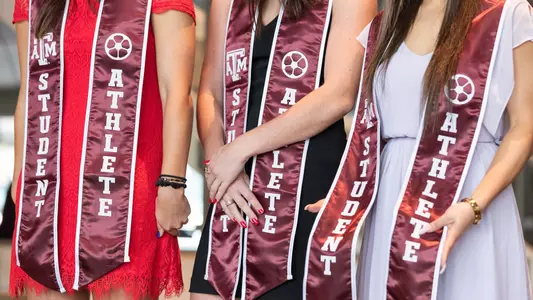
Supporting the Aggies
May 04, 2020 | General
"When we first learned there was a chance at an extended spring break, our first priority was the care and well-being of our student-athletes. Immediately, our staff was pro-active in addressing the many variables that came with this pandemic."
-Ross Bjork, Texas A&M Director of Athletics
Providing necessary support for the nearly 600 student-athletes at Texas A&M during any given school year is an enormous undertaking in the best of times.
It became far more challenging, however, when a pandemic turned everyday life across the planet, and subsequently on the campus of one of the nation's largest universities, upside-down.
The novel coronavirus pandemic has been a game-changer for everyone. At Texas A&M University, dedicated Athletics staffers immediately went into action and continue working overtime to ensure that Aggie student-athletes have everything needed to succeed whether they remain in College Station or with family back in other locations.
"New challenges can test the culture of an organization, and throughout this situation, we've learned to react, pivot, and change direction immediately based on input and needs of our student-athletes," Bjork said.
Academic Support
First, student-athletes at Texas A&M are STUDENTS. For the pandemic-altered spring semester, Texas A&M moved all 13,800 courses online and transferred 57,871 students and 2,988 faculty members to virtual classrooms … virtually overnight. The announcement that classes would move online came March 12, and courses began 11 days later.
"The unmatched student-athlete experience begins at first contact and continues through finishing their degree," Bjork said. "Being ready for all scenarios is part of the culture of Texas A&M. Did we see this coming? Not to this extent; however, we've been affirmed that this culture is focused on performance at a high level, and this staff reacted quickly and appropriately through our response."
Among the obstacles that Joe Fields, Texas A&M's Senior Associate Athletics Director for Student-Athlete Services, and his staff had to hurdle were making sure that each student-athlete had a computer and internet access. Promptly, the Center for Student-Athlete Services identified which students needed a computer and shipped laptops to them, and purchased mobile hotspots via the Student Assistance Fund. Books and other academic supplies were also shipped to student-athletes away from campus.
"Stopping was never an option academically," Fields said. "In an instant, we had to rethink the entire student-athlete experience. Within days, the Center for Student-Athlete Services formulated a plan to ensure our student-athletes were supported holistically. Their efforts should be applauded."
Staying connected to the student-athletes and their academic endeavors is critical, so the Center for Student-Athlete Services transitioned its weekly team meetings and advising appointments to a virtual format. Since the quarantine began, nearly 4,000 Tutoring and Learning Center appointments have taken place via Zoom.
Many of Texas A&M's international student-athletes returned to their home countries mid-semester when COVID-19 was upgraded to a pandemic. Fields and his crew assisted international student-athletes with support regarding visas, travel signatures and travel regulations.
Support for Mental Well-Being during Uncertain Times
With the unknown of the novel coronavirus pandemic and the stress that comes with it, Athletics' Counseling and Sports Psychology Services plays a substantial role in lives of Texas A&M student-athletes. Director Dr. Ryan Pittsinger, along with fellow sports psychologist Dr. Lauren Craig, continue providing initial and ongoing psychological assessments and counseling for all student-athletes, including individual and group counseling, as well as crisis counseling.
Fueling the Aggies
For Aggies remaining in College Station, the Slocum Nutrition Center was operational and offered a full complement of 14 meals – served in to-go boxes - per week. During COVID-19, the Slocum Nutrition Center served an average of 120 meals per day. Additionally, Texas A&M provides funds for other meals through the Red Card Meal Plan, which is a prepaid dining app that can be used at select locations around Aggieland.
Jonathan Tanguay, Director of Performance Nutrition, and his staff have contributed to sports performance packages for the sheltered-in-place student-athletes. Each package is filled with nutritional snacks, supplements and drinks of all varieties, sometimes even including that particular student-athlete's favorite flavor of Gatorade.
Additionally, the Performance Nutrition group regularly conducts nutrition consults via Zoom to help support the student-athletes' nutrition goals from home.
The popular @Aggie_Nutrition handle on Instagram also gives student-athletes handy tips on staying fueled during the pandemic, such as a basic grocery list, maintaining a fueling routine, how to avoid unwanted weight loss and even a simple pizza dough recipe. Using the #AggieEats hashtag, Texas A&M Athletics has posted how-to videos for meal options like breakfast omelets, chicken stir fry, teriyaki chicken, pulled pork and chili.
Medical Support
For student-athletes with a recent injury or recently completed surgery, the pandemic could not have arrived at a worse time. For students that remained in College Station with "mission critical" cases, on-campus physical therapy is available. For students with critical cases that went home, Dan Jacobi, Director of Athletic Training, and his staff coordinate physical therapy care in their hometowns.
Communication is key for Jacobi's staff, which also offers tele-health rehabilitation programs for off-campus cases, as well as regular communication via telephone, FaceTime and Zoom. The Athletics medical staff continues to advise sick student-athletes, including physician referrals, and offer best practice recommendations for their health needs.
Care packages of needed materials such as rehab equipment and quarantine cleaning supplies, as well as prescription medications, are sent to at-home student-athletes to help ensure their health and well-being.
The Aggie Family
With the focus squarely on their well-being and safety, Texas A&M Athletics is committed to caring for its student-athletes just like parents support their sons and daughters. No matter how long the "new normal" remains in effect, the 12th Man stands in support of its student-athletes, responding quickly and continuing this dedication to those we have been entrusted to serve.
"The response of our student-athletes is a testimony to the quality of recruits we seek to become Aggies," Bjork said. "While they are disappointed, they remain determined to use resources they have available to insure that when they return, they will be ready to compete at a higher level. I couldn't be more proud of their response during this unusual time for all of us. The quick reaction, care and follow-through exhibited by coaches and staff have been truly remarkable, and I'm grateful for the response by this amazing group."
-Ross Bjork, Texas A&M Director of Athletics
Providing necessary support for the nearly 600 student-athletes at Texas A&M during any given school year is an enormous undertaking in the best of times.
It became far more challenging, however, when a pandemic turned everyday life across the planet, and subsequently on the campus of one of the nation's largest universities, upside-down.
The novel coronavirus pandemic has been a game-changer for everyone. At Texas A&M University, dedicated Athletics staffers immediately went into action and continue working overtime to ensure that Aggie student-athletes have everything needed to succeed whether they remain in College Station or with family back in other locations.
"New challenges can test the culture of an organization, and throughout this situation, we've learned to react, pivot, and change direction immediately based on input and needs of our student-athletes," Bjork said.
Academic Support
First, student-athletes at Texas A&M are STUDENTS. For the pandemic-altered spring semester, Texas A&M moved all 13,800 courses online and transferred 57,871 students and 2,988 faculty members to virtual classrooms … virtually overnight. The announcement that classes would move online came March 12, and courses began 11 days later.
"The unmatched student-athlete experience begins at first contact and continues through finishing their degree," Bjork said. "Being ready for all scenarios is part of the culture of Texas A&M. Did we see this coming? Not to this extent; however, we've been affirmed that this culture is focused on performance at a high level, and this staff reacted quickly and appropriately through our response."
Among the obstacles that Joe Fields, Texas A&M's Senior Associate Athletics Director for Student-Athlete Services, and his staff had to hurdle were making sure that each student-athlete had a computer and internet access. Promptly, the Center for Student-Athlete Services identified which students needed a computer and shipped laptops to them, and purchased mobile hotspots via the Student Assistance Fund. Books and other academic supplies were also shipped to student-athletes away from campus.
"Stopping was never an option academically," Fields said. "In an instant, we had to rethink the entire student-athlete experience. Within days, the Center for Student-Athlete Services formulated a plan to ensure our student-athletes were supported holistically. Their efforts should be applauded."
Staying connected to the student-athletes and their academic endeavors is critical, so the Center for Student-Athlete Services transitioned its weekly team meetings and advising appointments to a virtual format. Since the quarantine began, nearly 4,000 Tutoring and Learning Center appointments have taken place via Zoom.
Many of Texas A&M's international student-athletes returned to their home countries mid-semester when COVID-19 was upgraded to a pandemic. Fields and his crew assisted international student-athletes with support regarding visas, travel signatures and travel regulations.
Support for Mental Well-Being during Uncertain Times
With the unknown of the novel coronavirus pandemic and the stress that comes with it, Athletics' Counseling and Sports Psychology Services plays a substantial role in lives of Texas A&M student-athletes. Director Dr. Ryan Pittsinger, along with fellow sports psychologist Dr. Lauren Craig, continue providing initial and ongoing psychological assessments and counseling for all student-athletes, including individual and group counseling, as well as crisis counseling.
Fueling the Aggies
For Aggies remaining in College Station, the Slocum Nutrition Center was operational and offered a full complement of 14 meals – served in to-go boxes - per week. During COVID-19, the Slocum Nutrition Center served an average of 120 meals per day. Additionally, Texas A&M provides funds for other meals through the Red Card Meal Plan, which is a prepaid dining app that can be used at select locations around Aggieland.
Jonathan Tanguay, Director of Performance Nutrition, and his staff have contributed to sports performance packages for the sheltered-in-place student-athletes. Each package is filled with nutritional snacks, supplements and drinks of all varieties, sometimes even including that particular student-athlete's favorite flavor of Gatorade.
Additionally, the Performance Nutrition group regularly conducts nutrition consults via Zoom to help support the student-athletes' nutrition goals from home.
The popular @Aggie_Nutrition handle on Instagram also gives student-athletes handy tips on staying fueled during the pandemic, such as a basic grocery list, maintaining a fueling routine, how to avoid unwanted weight loss and even a simple pizza dough recipe. Using the #AggieEats hashtag, Texas A&M Athletics has posted how-to videos for meal options like breakfast omelets, chicken stir fry, teriyaki chicken, pulled pork and chili.
Medical Support
For student-athletes with a recent injury or recently completed surgery, the pandemic could not have arrived at a worse time. For students that remained in College Station with "mission critical" cases, on-campus physical therapy is available. For students with critical cases that went home, Dan Jacobi, Director of Athletic Training, and his staff coordinate physical therapy care in their hometowns.
Communication is key for Jacobi's staff, which also offers tele-health rehabilitation programs for off-campus cases, as well as regular communication via telephone, FaceTime and Zoom. The Athletics medical staff continues to advise sick student-athletes, including physician referrals, and offer best practice recommendations for their health needs.
Care packages of needed materials such as rehab equipment and quarantine cleaning supplies, as well as prescription medications, are sent to at-home student-athletes to help ensure their health and well-being.
The Aggie Family
With the focus squarely on their well-being and safety, Texas A&M Athletics is committed to caring for its student-athletes just like parents support their sons and daughters. No matter how long the "new normal" remains in effect, the 12th Man stands in support of its student-athletes, responding quickly and continuing this dedication to those we have been entrusted to serve.
"The response of our student-athletes is a testimony to the quality of recruits we seek to become Aggies," Bjork said. "While they are disappointed, they remain determined to use resources they have available to insure that when they return, they will be ready to compete at a higher level. I couldn't be more proud of their response during this unusual time for all of us. The quick reaction, care and follow-through exhibited by coaches and staff have been truly remarkable, and I'm grateful for the response by this amazing group."

Thursday, April 09
Saturday, October 11
Saturday, October 04
Saturday, September 27